Southern University of Science and Technology · Nov 2024–Jun 2025
Acoustic Sensing
Class-incremental event recognition in optical fiber sensing
A distributed acoustic sensor can detect events along an optical fiber, but the set of events encountered in use changes over time. This project connects optical signal processing with a class-incremental learning pipeline for adding event classes while retaining earlier knowledge.
Technologies: Optical fiber sensing, φ-OTDR, MATLAB, Python, ResNet, class-incremental learning
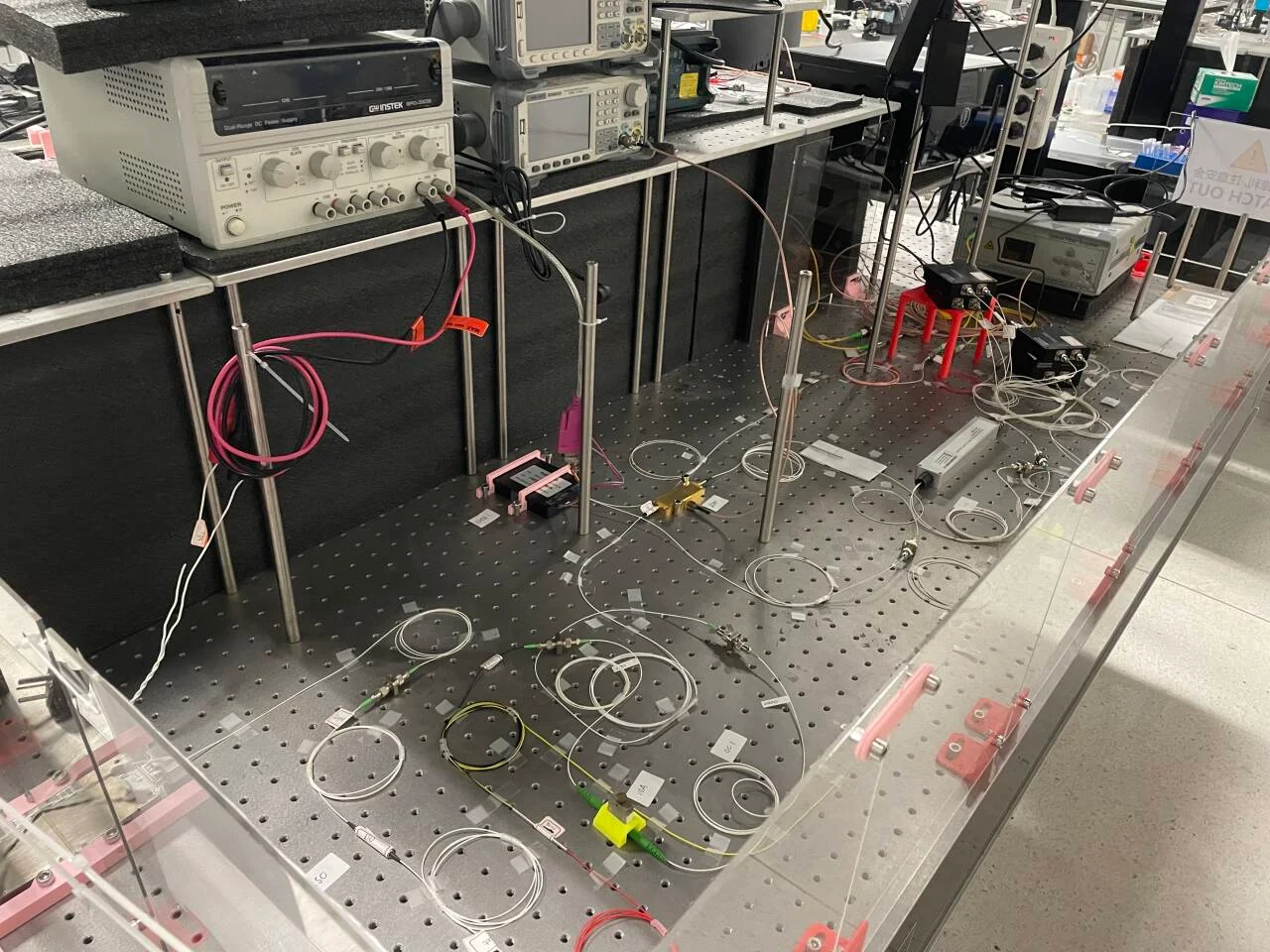
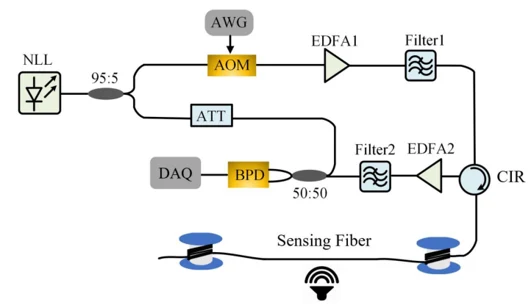
Optical sensing and signal preparation
The sensing system uses fiber backscatter as the observation signal. Heterodyne detection supports phase demodulation, and phase variations provide acoustic features. I processed those measurements into image representations for a ResNet-based event classifier.
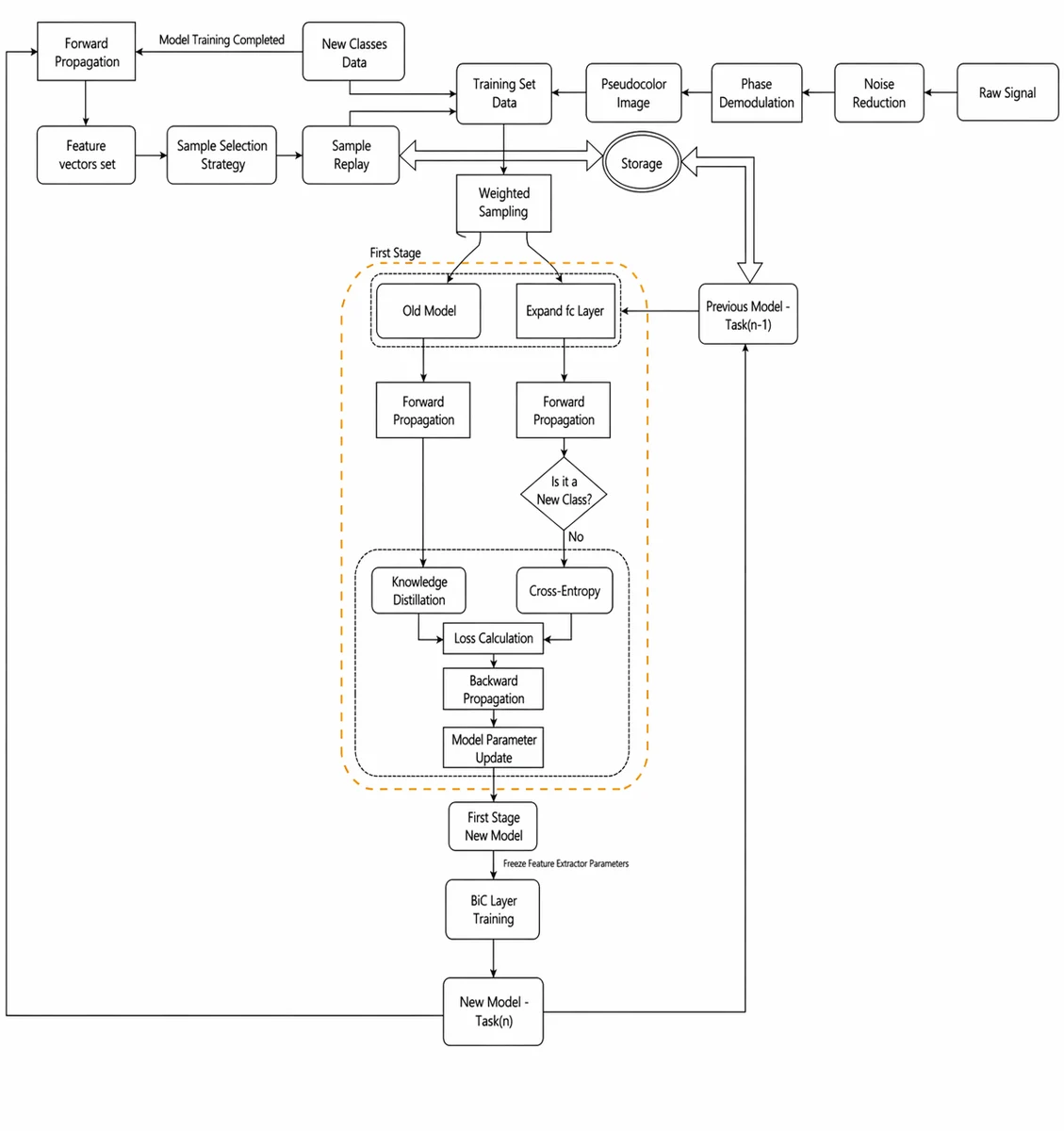
Sequential learning
I developed a hybrid incremental-learning framework that combines exemplar replay, logit distillation, bias correction and attention alignment. Replay keeps representative earlier samples available, while distillation and alignment constrain how the representation changes as new classes enter training.
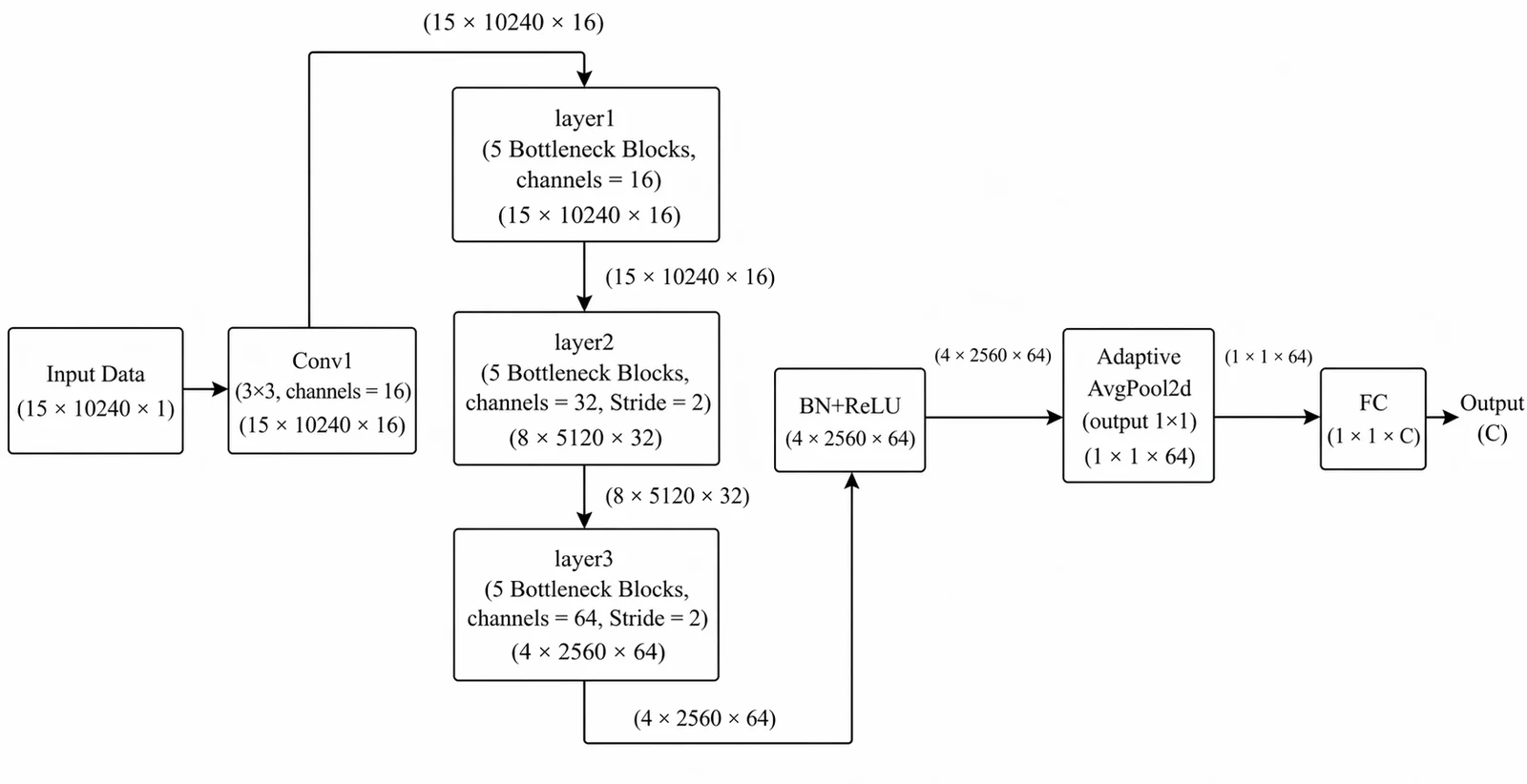
Model inspection
The retained results include model architecture, feature-space inspection and a confusion matrix across old and new classes. These views make the effect of sequential updates visible beyond one aggregate accuracy number.
Related pipeline-monitoring work
Earlier work on pipeline safety monitoring combined a φ-OTDR sensing system, MATLAB signal demodulation and Python-based deep-learning event recognition. That project received a Bronze Award in the 14th Challenge Cup National Competition.